The Edit · Travel · California
The Edit · Travel · California
Santa Barbara rewards a plan more than a wander. The town itself is lovely and busy; the magic sits just above it, in the foothills, where two hundred and fifty years of California history and its quietest money keep house. Do it as three moves: one lunch, one mission, one very slow drive.
Move One · The Lunch
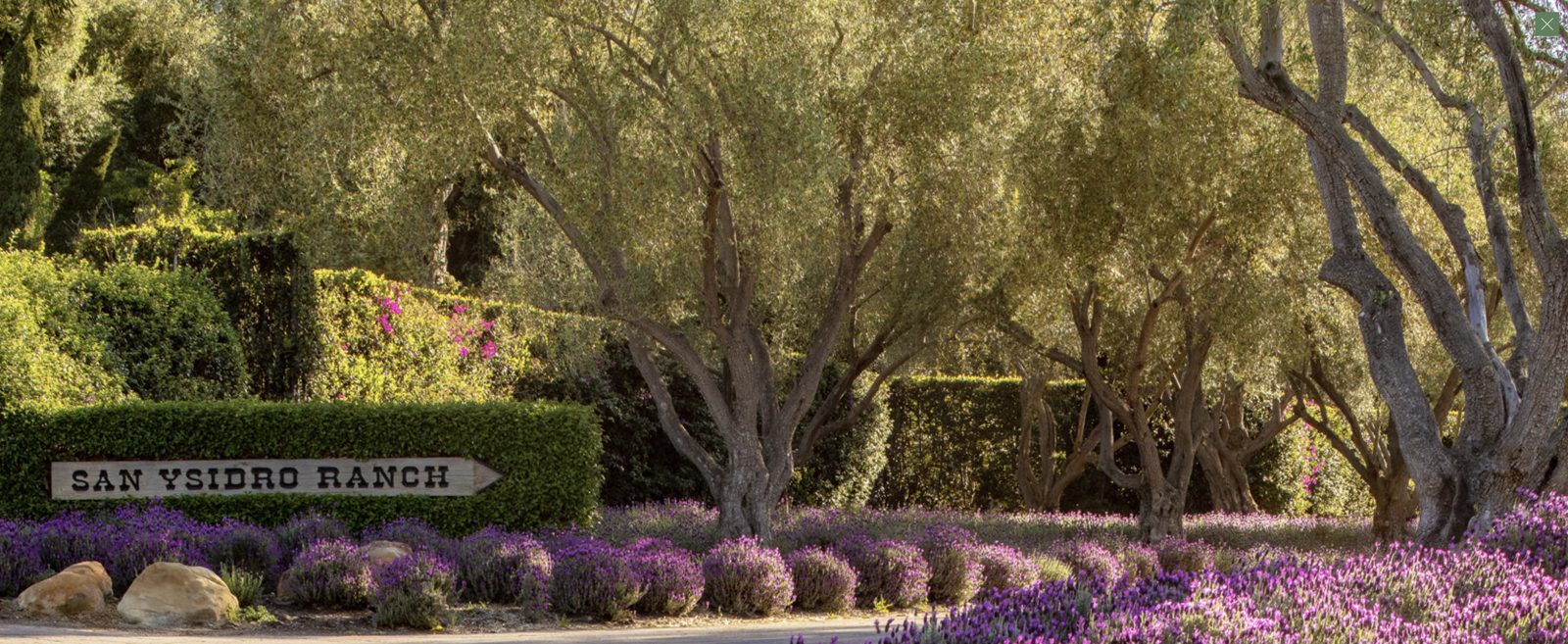
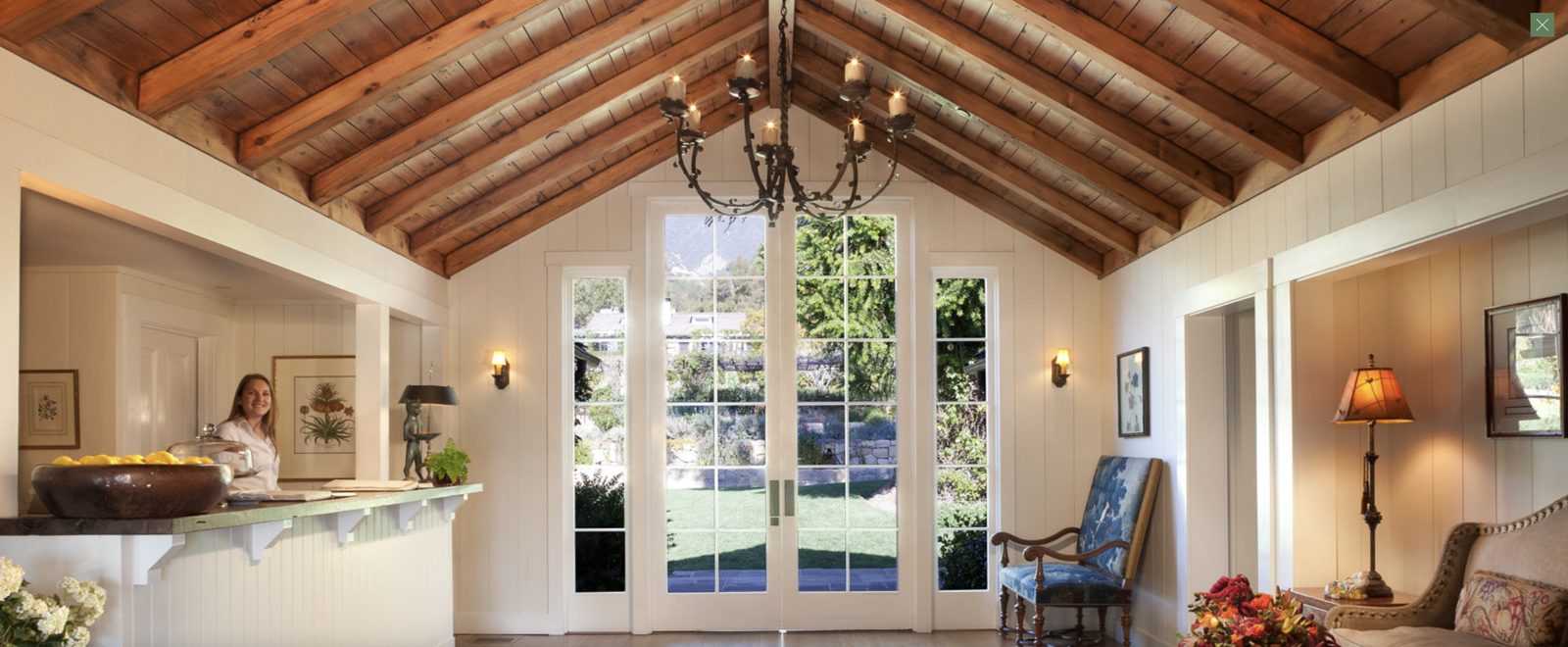
Book lunch at San Ysidro Ranch, in the Montecito foothills, and arrive early enough to walk the gardens — lavender paths, citrus groves, a rose garden with a color for every mood. The land was deeded under the Spanish crown in the 1700s and sheltered Franciscan friars before it became a citrus ranch shipping hundreds of thousands of oranges and lemons a year; the sandstone packing house they built in 1889 is now the Stonehouse, the ranch's storied dining room, holder of Wine Spectator's Grand Award. Lunch on the garden terrace, with the foothills stacked behind the wisteria, is one of the great civilized afternoons in California. (The Plow & Angel, the snug pub below it, takes its name from the iconography of Saint Isidore himself — patron of farmers, always painted with his plow and his angel.)
And the guest book explains the aura: Winston Churchill wintered here in 1912. John Huston finished The African Queen in residence. Vivien Leigh and Laurence Olivier exchanged midnight vows in the gardens in 1940, and in 1953 John and Jacqueline Kennedy honeymooned in the cottage that now bears their name — Camelot, quite literally, began here. Hollywood actor Ronald Colman bought the ranch in the thirties and built its house rule, which still holds: absolute discretion. You may recognize no one at lunch. That's the product.
Move Two · The History
Drive ten minutes down from the foothills to Old Mission Santa Barbara, founded on the feast of Saint Barbara in 1786 — the tenth of California's twenty-one missions, and the one they call the Queen. She earns the title on sight: the only mission crowned with twin bell towers, her rose-hued Neoclassical façade adapted by the padres from a pattern book of ancient Roman architecture, set on a rise with the town and the Pacific spread below. The Chumash people, on whose land the mission rose, built her walls and their story is inseparable from hers — the mission's museum treats that history with more honesty than most.
Two details worth knowing as you stand in the plaza: the 1925 earthquake brought her towers down, and the town rebuilt them true to the originals — Santa Barbara's whole white-walls-and-red-tile look dates to that rebuilding, when the city chose one architectural language and never looked back. And the Franciscans never left: this is the only California mission under their continuous care since its founding, which is why she feels less like a monument than a working, breathing place. Go late afternoon, when the light turns the façade to honey and the rose garden across the lawn is at its best.
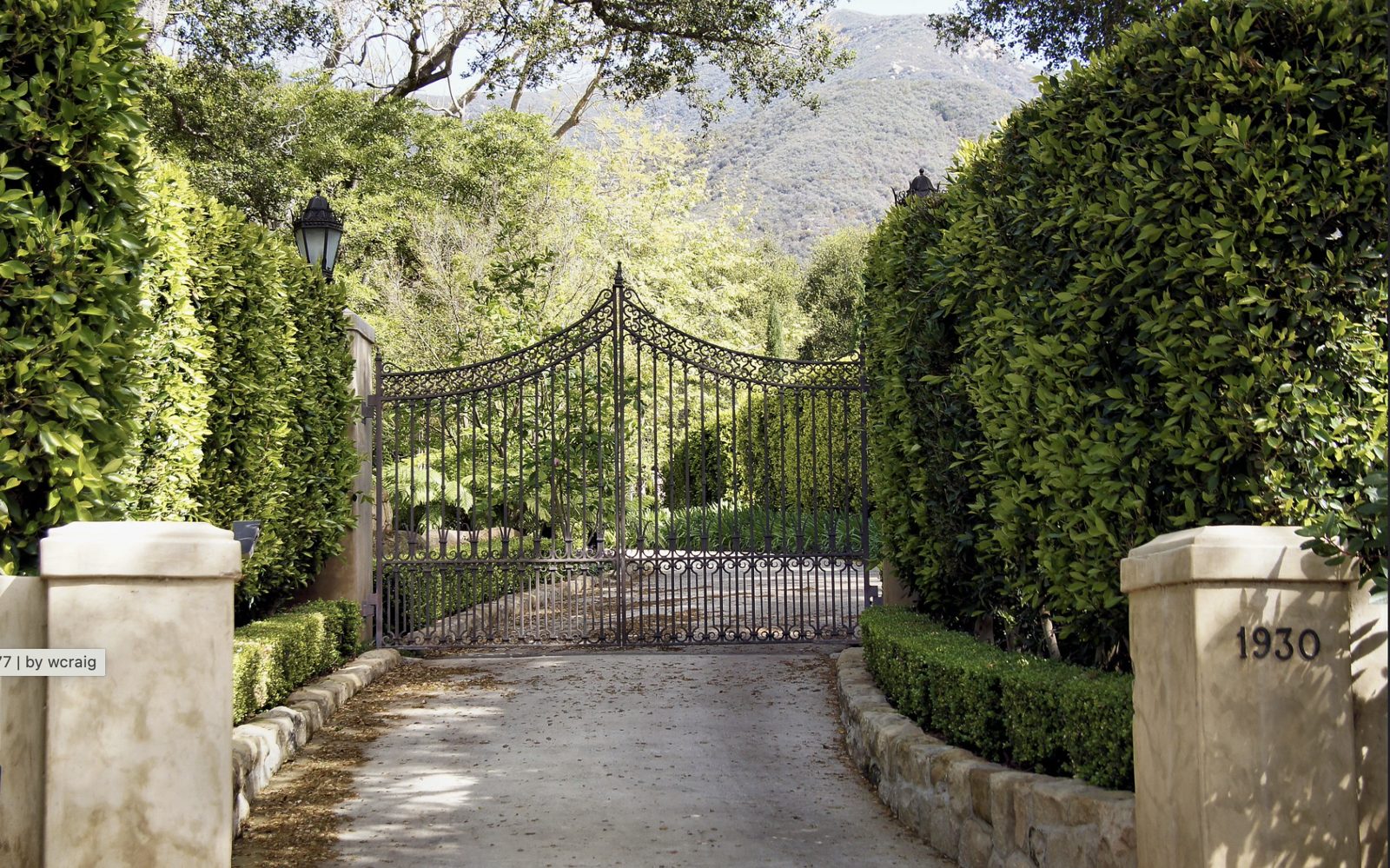
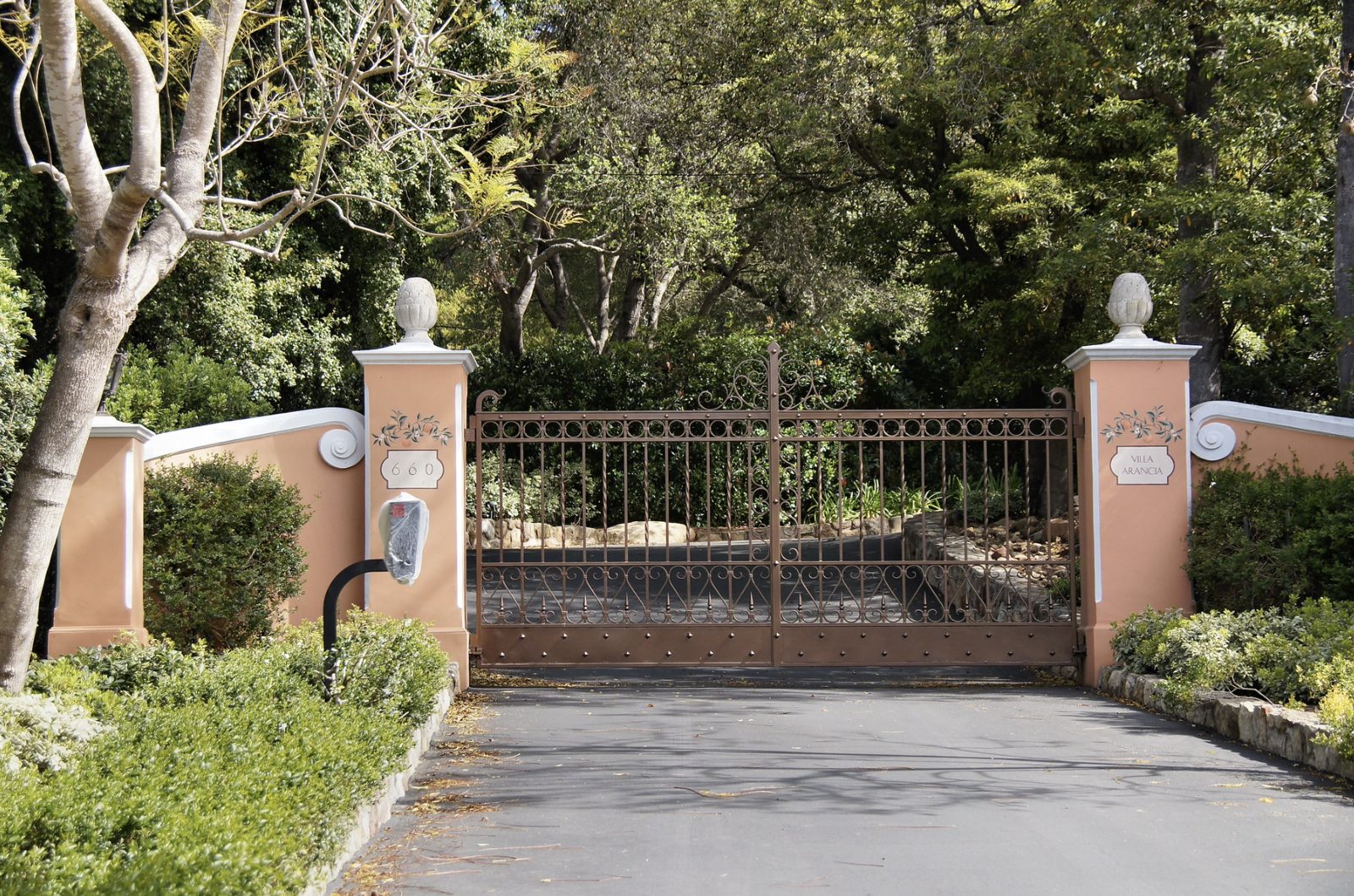
In Montecito, the architecture you're allowed to see is the gate — and the gates say everything.
Move Three · The Drive
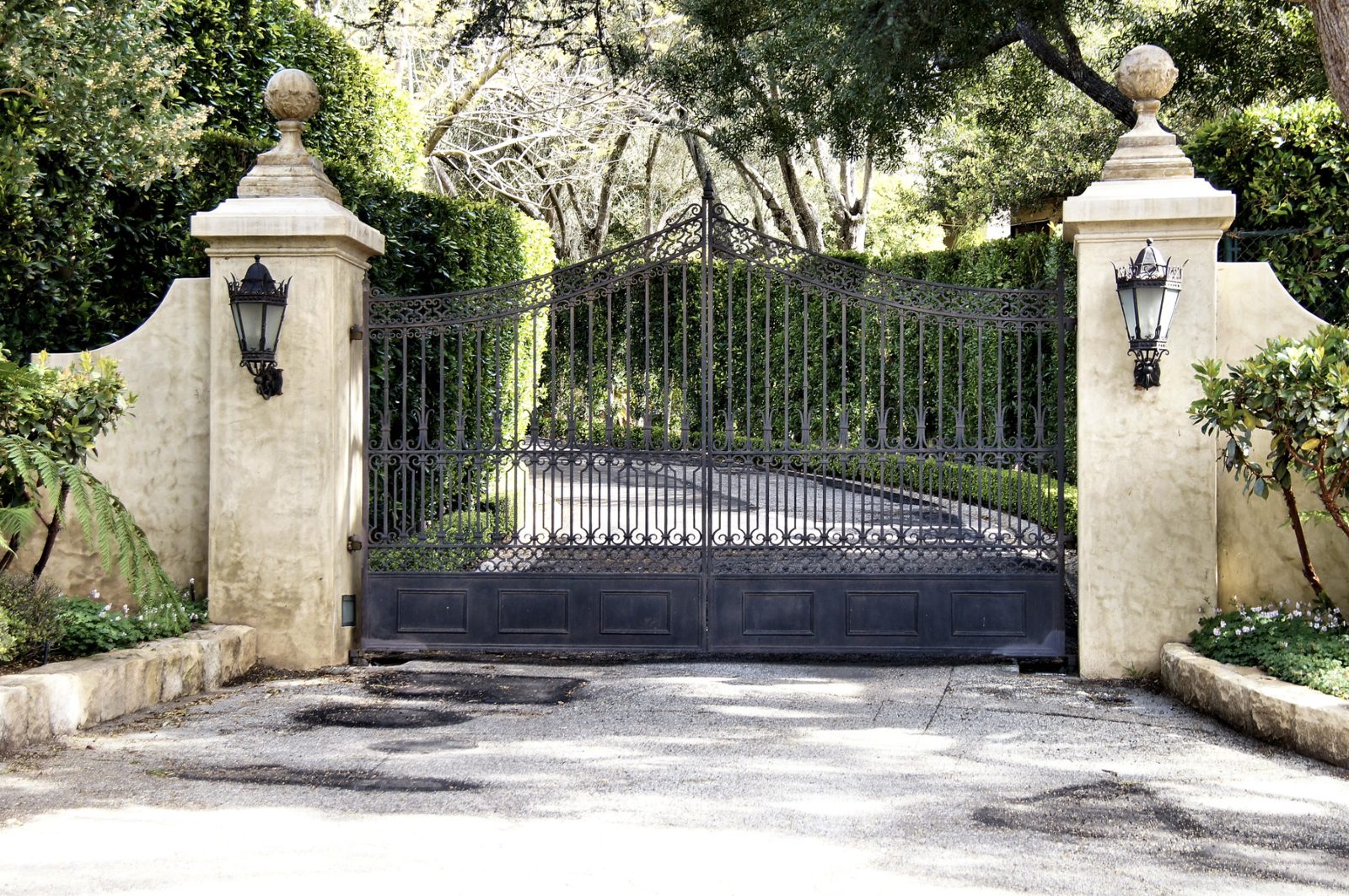
The third move costs nothing and might be the most interesting hour of the day. Take the car slowly through Montecito's lanes — East Valley Road, Picacho, Hot Springs, the eucalyptus tunnels in between — and study the only architecture the neighborhood lets you see: the gates. Great slabs of steel set in ten-foot hedges. Weathered wood between sandstone piers older than the state. Estate walls that run a full block and give away nothing but the gardener's standards. You won't get past a single one, and that's the point — nowhere else in America does the threshold carry this much of the design budget, because nowhere else is privacy so completely the product being bought.
It's a professional habit, admittedly — spend enough years around luxury real estate and you learn that a gate is a thesis statement: what the owner values, what they fear, how they want to be perceived by people they'll never meet. Montecito's gates are the most eloquent in the country. The residents behind them, you mostly already know by name — which is rather the proof of the argument. An hour of slow driving here teaches more about what the top of the market actually buys — seclusion, softened by beauty — than any glossy listing ever will. And for what it's worth, exactly one street in Arizona speaks this dialect: Saguaro, in Paradise Valley — the closest thing the desert has to a Montecito lane.
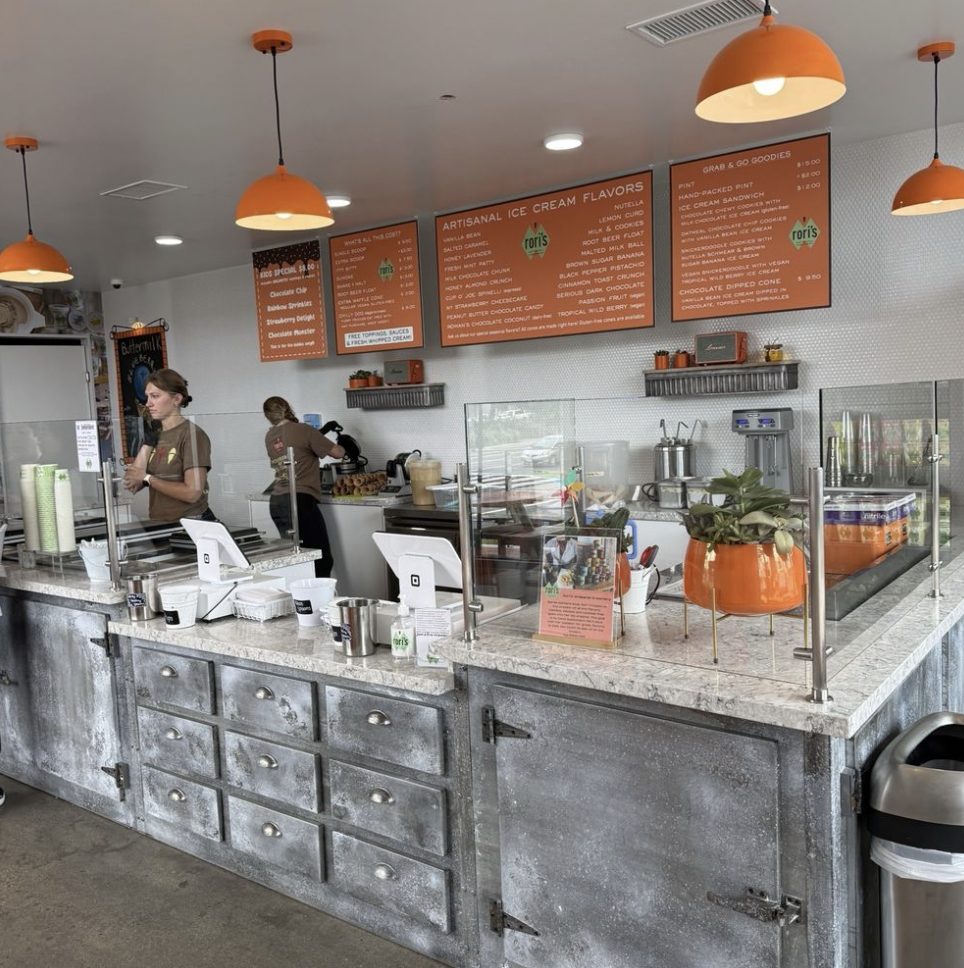
End the drive the way the locals do: pull into the Montecito Country Mart and join the line at Rori's Artisanal Creamery — Rori Trovato's original scoop shop, churning small-batch ice cream from local Central Coast dairy since 2012. A scoop of the salted caramel, a bench in the courtyard, the hedges of the neighborhood you just read all around you. Enjoy life before it melts is the house motto; after an afternoon like this one, it reads like advice.
One historic lunch, one queen of a mission, and the most articulate gates in America — Santa Barbara in an afternoon. And if the drive leaves you thinking about what privacy looks like back home — Paradise Valley speaks the same language, with mountains for hedges — Marta is always happy to trade notes.